How to Be Independent as a Young Adult (Without Cynicism): Build the Character That Creates Options
If you’re trying to figure out how to be independent as a young adult, “just work harder” isn’t a plan — it’s a pressure cooker. Most people don’t need more intensity. They need more clarity, a steadier inner foundation, and a few character upgrades that create real options.
You’re not alone if this season feels heavier than it “should.” When you’re young and you don’t have much of a track record yet, it can feel like the whole world is watching… even when nobody is. The pressure is real. The uncertainty is real. And if you’re not careful, that mix can quietly produce cynicism — not because you’re incapable, but because you’re stuck in the awkward middle between adolescence and adulthood.
The Moment It Hit Me: Independence Felt Like the Whole Game
I remember being around 20 and feeling like I had the weight of the world on my shoulders.
Not in a poetic way. In a “how am I going to make money, move out, and not disappoint everyone” way.
In my head, independence wasn’t just a milestone — it was a verdict. Like I was a loser until I could pay my own rent and live on my own terms.
The problem was: I couldn’t seem to hold the odd jobs I could get. I couldn’t stand how mind-numbing it felt to show up every day to work that didn’t require much of me besides compliance. And the more I tried to force myself to fit into it, the more compressed I felt — like a mountain sitting on my chest.
Because I knew (even then) I didn’t just want “a job.”
I wanted an income that felt authentic to me.
I wanted work that didn’t make me smaller.
And when you don’t know how to get there yet, that desire can turn into pressure, shame, and a quiet panic that you’re going to be stuck forever.
The emotional reality no one warns you about
If you’re in this stage now, it often feels like:
- pressure to “figure it out” fast
- shame that you don’t have a track record yet
- uncertainty about what you’re actually capable of
- fear that everyone else has some secret roadmap you missed
And that mix is exactly where cynicism can start to grow.
And if you’re stuck in that loop, learning how to be independent as a young adult often starts with reducing pressure and building a few small, steady wins.
How to Be Independent as a Young Adult Without Cynicism (The “Awkward Middle”)
There’s a phase a lot of people don’t name: you’re technically an adult, but you’re still carrying a bunch of adolescent wiring.
Not because you’re broken. Because you’re human.
This is the awkward middle ground where you want the dignity of adulthood — freedom, respect, autonomy — while still living with:
- inconsistent habits
- low accountability (or accountability that only shows up when you feel like it)
- strained parental relationships that still shape your identity
- emotional patterns you picked up as a teenager and never questioned
So you end up in this weird limbo:
You want a meaningful life, but you don’t yet have the inner structure to build it.
Why cynicism shows up here (and why it’s not proof you’re doomed)
Cynicism isn’t always “just your personality.”
Sometimes it’s what happens when hope keeps getting disappointed.
You try.
You fail.
You feel judged (by others or yourself).
You decide the system is rigged.
You stop trying as much — not because you don’t care, but because caring started to feel expensive.
The tragedy is when people stay in this middle longer than necessary and mistake a temporary phase for a permanent sentence.
Why This Impacts Your Career So Much (Even If You’re Smart and Capable)
When you haven’t built a track record yet — of consistency, reliability, follow-through — work can feel like a trap.
Not because every job is evil.
But because without self-trust, everything feels fragile.
Without self-trust, every job feels like confinement
If you don’t trust yourself to:
- show up consistently
- manage your emotions
- follow through when it’s boring
- recover after a setback
…then any job starts to feel like it has too much power over you.
And that’s when you get the “mind-numbing” experience: not just boredom, but the feeling of being confined inside a system you don’t respect.
Resentment becomes a default personality (because it protects you from feeling behind)
If you feel behind, resentment can become armor:
“If this job is pointless anyway, then it doesn’t mean anything that I’m struggling.”
“If the world is unfair anyway, then it’s not my fault I feel stuck.”
But armor has a cost: it blocks hope, learning, and forward motion.
And without forward motion, you don’t build options.
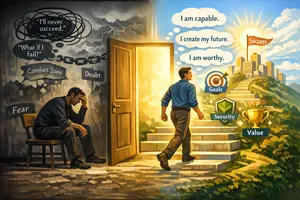
The Identity Shift: From “Life Happens to Me” to “I Can Steer”
If you want to learn how to be independent as a young adult, this is the real pivot: independence isn’t just moving out or making more money — it’s becoming the kind of person who can create stability and meaning on purpose.
That requires a shift from victimhood/resentment to self-authorship.
Not in a harsh, bootstrap-y way.
In a grounded way.
Here’s one of the most useful truths you can adopt:
It might not be your fault… but it is your responsibility.
Your upbringing may have been chaotic.
Your relationships may have left scars.
You may have had setbacks that weren’t fair.
All true.
But the way forward is still the same: you treat your circumstances like training instead of a prison sentence.
Challenges aren’t proof you’re stuck — they’re the curriculum
Deep work is not just introspection. It’s honesty.
It’s looking at what’s uncomfortable and asking:
- What is this trying to teach me?
- What story am I living in right now?
- What would the long-term fix look like (even if it’s harder at first)?
Because the long-term fix is what creates options.
The Character That Creates Options (A Practical Framework)
If you’re wondering how to be independent as a young adult, don’t start by trying to “find yourself” first. Build yourself — through reps.
Below are character adjustments that tend to unlock independence faster than any one perfect job idea.
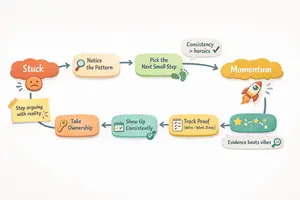
1) Reliability (show up even when it’s boring)
Boring work isn’t the dream, but it can be training.
Reliability builds something you can’t fake: a reputation with yourself.
Try this:
Pick one small commitment for the next 14 days (work, fitness, learning, budgeting).
Keep it even when the emotion isn’t there.
That’s adulthood: you stop needing the mood in order to move.
2) Accountability (stop negotiating with reality)
A lot of young adult stuckness comes from constant negotiation:
“I’ll start when I feel ready.”
“I’ll commit when I’m confident.”
“I’ll change when it’s less uncomfortable.”
Accountability sounds like:
“This is where I am. This is what I can control. This is what I’m doing next.”
Even if it’s small.
3) Emotional regulation (resentment isn’t a plan)
If you’re serious about how to be independent as a young adult, you can’t outsource your emotional life to circumstances.
Resentment and bitterness can feel like insight, but they’re usually just pain with a storyline attached.
You don’t need to shame yourself for it.
You need to work with it.
Ask:
- What am I actually angry about?
- What boundary is being crossed?
- What standard do I want to live by instead?
Your emotions are signals. They can guide you. But they can’t run your life.
4) Financial basics (a simple foundation creates freedom)
Independence becomes much more possible when fear drops.
You don’t need to become a finance genius.
You need a floor.
Start simple:
- Know your monthly number (bare minimum expenses)
- Build a small buffer (even $500 changes how you think)
- Reduce obvious leaks
- Learn to treat money as a tool, not a mood
A financial baseline gives you breathing room — which gives you better decisions.
5) Boundaries with parents/partners (so your life is actually yours)
If your identity is still tangled in old dynamics, it’s hard to build an adult life.
Independence sometimes looks like:
- not explaining every choice
- not seeking permission emotionally
- not letting conflict dictate your decisions
- choosing standards even when people don’t like them
Boundaries are how you stop living as a reaction to other people.
6) Build a track record through small wins (confidence comes from receipts)
When you’re young, the biggest fear is often:
“What if I’m not capable?”
The antidote isn’t reassurance.
It’s proof.
Small wins compound:
- finish a short course
- hold a job for 6–12 months with solid performance
- complete a project and document it
- build a side skill and earn your first dollar from it
- get one mentor-type relationship going
Confidence isn’t something you find. It’s something you earn — through receipts.
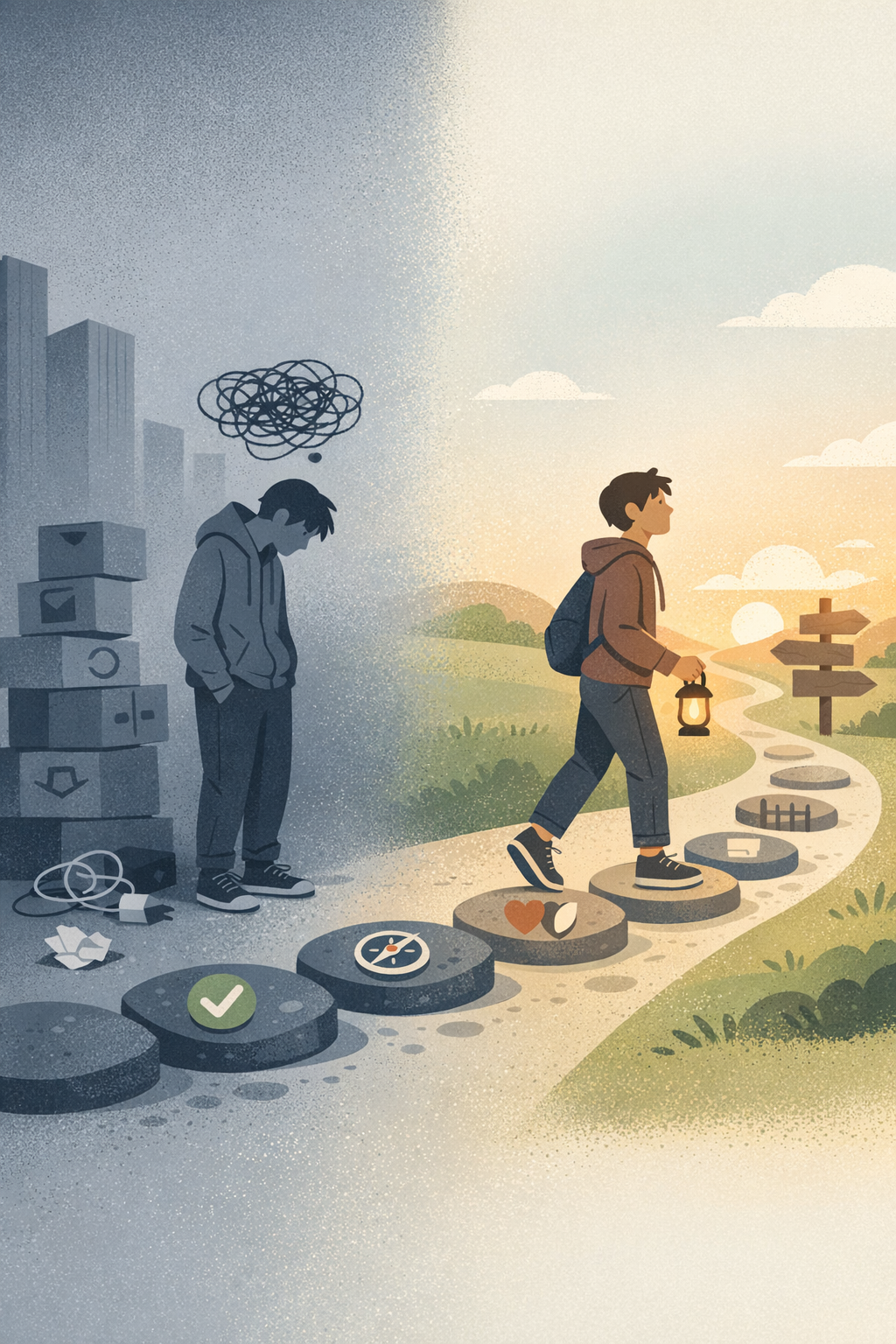
The Springboard vs. The Sentence
Here’s the difference between people who learn how to be independent as a young adult and people who stay stuck for years: they don’t treat young-adult pitfalls as destiny.
Young adulthood has pitfalls. That’s normal.
The tragedy is when you interpret those pitfalls as your identity:
“I guess this is just who I am.”
“I guess I’m not built for success.”
“I guess work will always feel like a burden.”
That’s the sentence.
The springboard is different:
“This is a phase.”
“This is training.”
“This is where I build the character that creates options.”
Once you cross that threshold — once you start practicing reliability, accountability, emotional maturity, financial basics, and self-authorship — your world expands.
Not overnight. But noticeably.
And your career changes too, because you’re no longer trying to be rescued by the “perfect job.”
You’re becoming the kind of person who can build a life that fits.
FAQ: Young Adult Independence and Career
Why do I feel behind in my 20s?
Because your 20s are the first decade where you’re expected to be “an adult” without having much evidence yet that you can do it. You don’t have a long track record to lean on. You’re still shedding adolescent habits. And meanwhile, you’re looking around thinking everyone else got a manual you didn’t.
Feeling behind is often just the friction of becoming someone new. The trap is when you turn that friction into an identity:
“I’m behind, therefore I’m failing.”
No — more likely you’re in a very normal phase where your inner standards haven’t fully caught up to the life you’re trying to build.
How do I become independent if I don’t know what career I want?
If you’re trying to learn how to be independent as a young adult, you don’t need the final career answer first. You need traction.
Independence comes from building a foundation:
1) reliability
2) a financial floor
3) basic self-trust
Once you have that, career clarity becomes easier because you’re no longer trying to “figure out your whole life” from a stressed-out baseline. Choose the next doable step that creates data, then adjust.
What if I hate every job I can get right now?
You’re not crazy. A lot of early jobs can feel painfully mind-numbing — especially if you’re wired for challenge, meaning, or creativity.
Don’t confuse “this job isn’t it” with “work will always feel like this.”
Early jobs are often less about fulfillment and more about building habits, credibility, skills, and runway.
Treat the job as a gym, not a life sentence. Use it to train stability while you build your next option in parallel.
How do I stop being cynical about work?
Cynicism usually isn’t a personality trait — it’s a protective response.
The way out isn’t “be positive.”
It’s honesty + action.
Ask:
- What am I actually resentful about?
- What boundary do I need that I’m not holding?
- What would the long-term fix look like?
Cynicism fades when you start collecting receipts that you can change your life. Evidence beats attitude.
What’s the first step I should take this week?
Pick one “character rep” and do it for 7 days.
Examples:
- show up on time all week
- do one 45-minute skill block and finish a tiny output
- track spending for 7 days (no judgment — just awareness)
- apply to 3 jobs you can do now, and message 1 person doing work you’d like to do later
The goal isn’t to reinvent yourself this week.
It’s to become the kind of person who can build — without needing motivation to be perfect first.
Related Posts:
Recent Articles


-
Biggest Change in Life
Dec 31, 25 06:53 PM
 How your career can offer the biggest change in life and why mindset is the hidden barrier
 -
Process of Becoming an Adult
Oct 05, 25 12:18 PM
A practical 5-pillar framework for the process of becoming an adult: build independence, income, resilience, emotional strength, and a reputation you can use. -
Did the results of the last election hurt your industry and career?
May 02, 25 03:20 PM
Career and elections. Some helpful perspective when results seemed to have hurt your career opportunities.