Changing Your Path: From Career
Confinement to a Life That Fits Again
A warm, practical guide for ambitious (and a little burned-out) professionals to spot the “dusty road,” reclaim their levers, and take the first grounded steps toward a freer future.
I
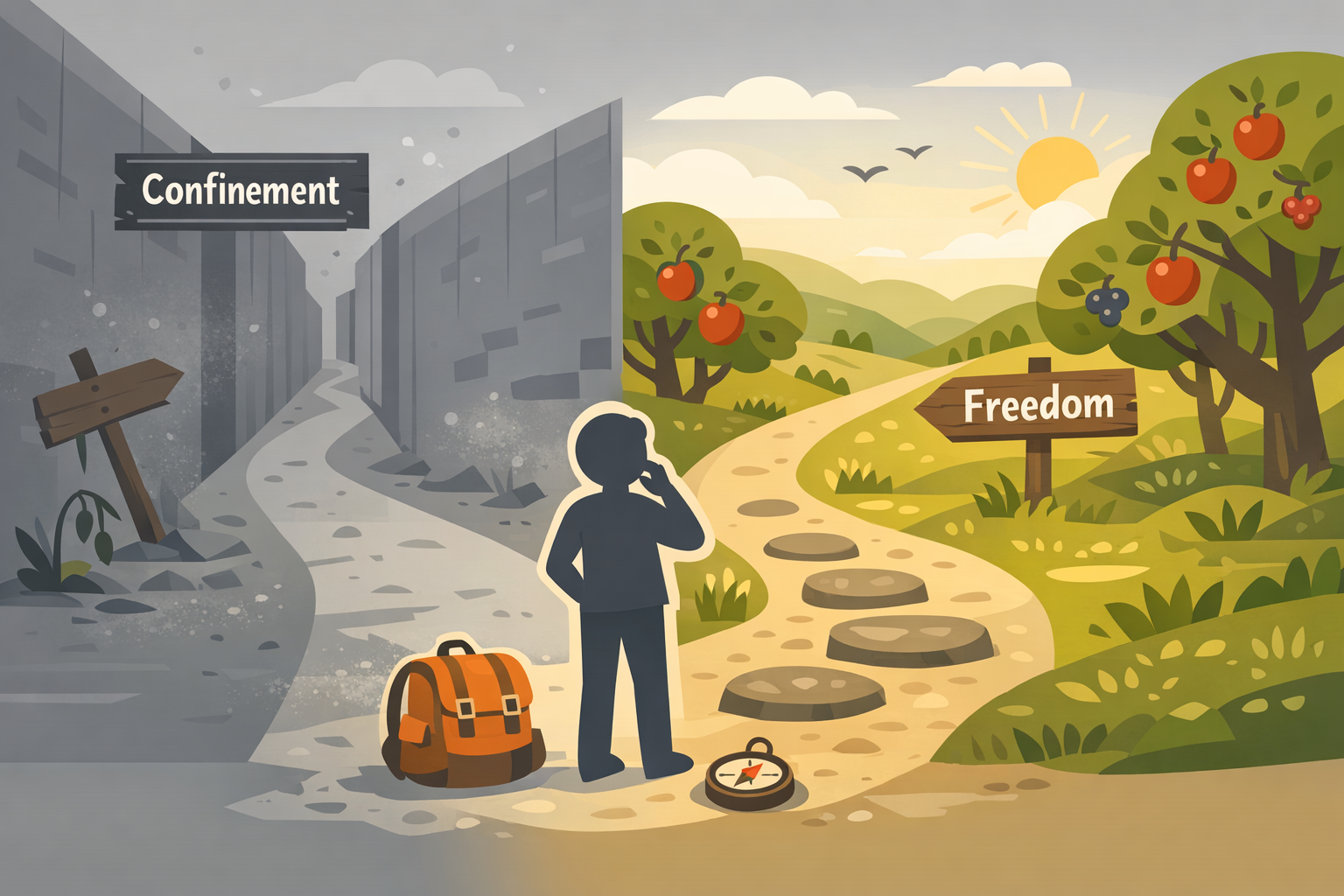
love the analogy of a career as a path. Not a ladder. Not a “track.” A path.
Because a real path implies movement. You can wander a little. You can stop,
look around, change direction, pick something up, put something down. A path is
freedom. It’s the ability to explore without needing permission slips from your
calendar or your boss or your younger self who made a decision in 2016 and now
expects you to honor it forever.
But here’s the candid part: when you feel stuck and unfulfilled, it’s not just
that your job is “hard.” It’s that your job has quietly stopped being a path.
It becomes a corridor. Confinement disguised as stability.
And like any path, a career is only useful if it gets you where you actually
want to go. If it’s not doing that, your nervous system notices before your
resume does. You feel frustrated. Restless. A little crispy around the edges.
(Burnout has a vibe.)
That’s why career shifts aren’t just about swapping titles. They’re about
changing your path. And yes—sometimes changing your path means forging a new
one entirely.
If your own path feels like a trap and you're unsure where to start, read: Follow Your Intuition in a Career Change: The Inner Curriculum That Reveals Your Next Step to learn how uncertainty can become your compass.
So let’s ask the real question: is your career a path of freedom… or
confinement?
How You Know Your Path Has Become Unfit
An
unfit path is one you can’t move on anymore. You can’t explore. You can’t
stretch. You can’t feel invigorated—because the terrain has gone stale.
There are no “fruits” to pick along the way:
- No new skills that actually matter to you
- No meaningful wins that make you proud
- No momentum
- No sense of “I’m becoming more me”
And often, the people who used to feel like fellow travelers either aren’t
there anymore—or you’ve outgrown the journey you used to share.
It’s just a dusty old road you keep walking because you already know where the
potholes are.
Now, society will try to grade your career like a report card:
“Good pay?” “Good benefits?” “Looks impressive on LinkedIn?” “Decent vacation
days?”
Those things can matter, sure. But they’re not the real measure of fit. The
real measure is internal: does this career give you room to choose and grow—or
does it box you in?
Because here’s the plot twist: the same job can be freedom for one person and
confinement for another. Fit is personal. Always.
And unfortunately, plenty of high-achieving people stay on a path they
experience as confinement simply because other people see it as “comfortable.”
Which is a polite way of saying: “Don’t scare us by changing.”
SIGNS YOUR PATH IS CONFINEMENT
A
career becomes confinement when it stops responding to who you are now—when
your ability to move, grow, and choose gets limited.
- Your options keep shrinking. Fewer chances to try new work, pivot, or expand. Everything feels “locked in.”
- You’re trading your values for stability. It looks safe, but it costs you energy, health, or meaning.
- The work stops feeding you. The fruits are gone—only maintenance remains.
- You feel drained before you start. Not occasional stress… but a steady emotional weight.
- Your strengths are underused or punished. Initiative is “too much,” creativity is “off-brand,” honesty is “not political.”
- You can’t pull the levers you need. You want more flexibility, challenge, impact, income, or growth—but the system won’t let you reach for it.
- You’re stuck in desperate searching mode. You keep hunting for hope, possibility, healing, answers… because something essential is missing.
- You’re living for time outside the job. Work becomes the toll road you pay to access your real life.
- Your identity is shrinking. You’re quieter, smaller, more cautious over time.
- You keep telling yourself, “It shouldn’t be this hard.” You’re using willpower to force alignment that isn’t there.
And if that list stings a little, good. Not because I want you
uncomfortable—but because discomfort is often the clearest sign you’re ready
for changing your path.
Is Your Career Taking You Where You Need To Be?
Quick
reset: what matters to you in this season of your life?
Job attributes like these are clues:
- Schedule flexibility
- Growth
- Challenge
- High salary
- Impacting others
And here’s the honest truth: what you value changes. Your life changes. The job
changes. So the fit changes.
The common misconception (and it’s a big one)
People chase job attributes like they’re trophies.
But the real value isn’t “having” flexibility, growth, or impact as static
perks. The real value is having the freedom—the path—to pursue them when you
need them.
Example: earning more isn’t just about salary. It’s about whether you have
levers you can pull:
- Can you take initiative and get rewarded?
- Can you build skills that translate into higher value?
- Can you negotiate?
- Can you create opportunities rather than wait for them?
Even if you don’t need a specific attribute right now, you want the capacity to
reach for it later. That’s what makes a path feel free.
When you can’t grasp what you need—when the levers aren’t in your hands—that’s
when you experience your career as confinement. And that’s when changing your
path stops feeling optional. It starts feeling necessary.
FIRST STEPS TO CHANGING YOUR PATH
You don’t need the whole map. You need a flashlight and a first step.
1) Name what feels confined
Write down 3–5 specific moments that make you feel stuck (tasks, meetings,
pace, people, lack of growth). This turns vague dread into usable data.
2) Define your “freedom markers”
Choose your top 3 non-negotiables right now (flexibility, growth, challenge,
salary, impact). This is your compass.
3) Identify what’s missing (the fruit)
Ask: What do I need that I can’t currently grasp here—skills, autonomy, creativity,
healthier culture?
4) Take one low-risk exploration step
Don’t quit—probe. One informational conversation. One small portfolio piece.
One short course. One internal project. One tiny test.
5) Create a 30-day foothold plan
Pick one direction and commit 2–5 hours/week. Track energy gained vs. drained.
Your body is a better advisor than your fear.
Momentum doesn’t come from certainty. It comes from movement. That’s the sneaky
magic of changing your path.
What A Free Path Looks Like
A
free path isn’t easy. It’s alive.
- You have room to explore without burning everything down.
- Work creates energy more often than it consumes it.
- You can pull meaningful levers (income, flexibility, challenge, impact, growth).
- Growth is available and encouraged.
- Your strengths are recognized and used well.
- Your values fit the culture (you don’t have to perform a fake version of yourself).
- You can see multiple next steps.
- You feel proud of the direction—because it aligns with who you’re becoming.
- The path opens over time: more confidence, more skills, more options.
If confinement feels like repeating the same day until you run out of yourself,
a free path feels like becoming more yourself as you walk.
HEARING THE CALL (and why it’s identity-level)
A
stuck path becomes a driving force for change. It shows up as
discontentment—the internal nudge that says, “We can’t stay here.”
And when people finally listen, they often try to find a convenient path:
predictable, cleared, no uncertainty, end destination guaranteed.
But meaningful change doesn’t work like that. The value of a career transition
is that it challenges your definition of who you are and what’s possible.
That’s why changing your path can feel emotional, slow, and weirdly vulnerable.
You’re not just switching jobs—you’re updating your identity.
If you’re stuck because you’re afraid you’ll choose wrong, read: Fear of Career Change: Why ‘Choosing Wrong’ Isn’t the Problem (Stagnation Is).
If that sounds intense, it’s because it is: a career shift can be the biggest change in life because it changes your identity, not just your income.
If you’re early in your working life and feel stuck in that awkward middle ground between adolescence and adulthood, read this next: How to Be Independent as a Young Adult (Without Cynicism): Build the Character That Creates Options
Forging a new path is like shining a light into a dark forest. You cut down
foliage one step at a time. You lay footing as you go. You don’t see the whole
trail. You see the second step after you take the first.
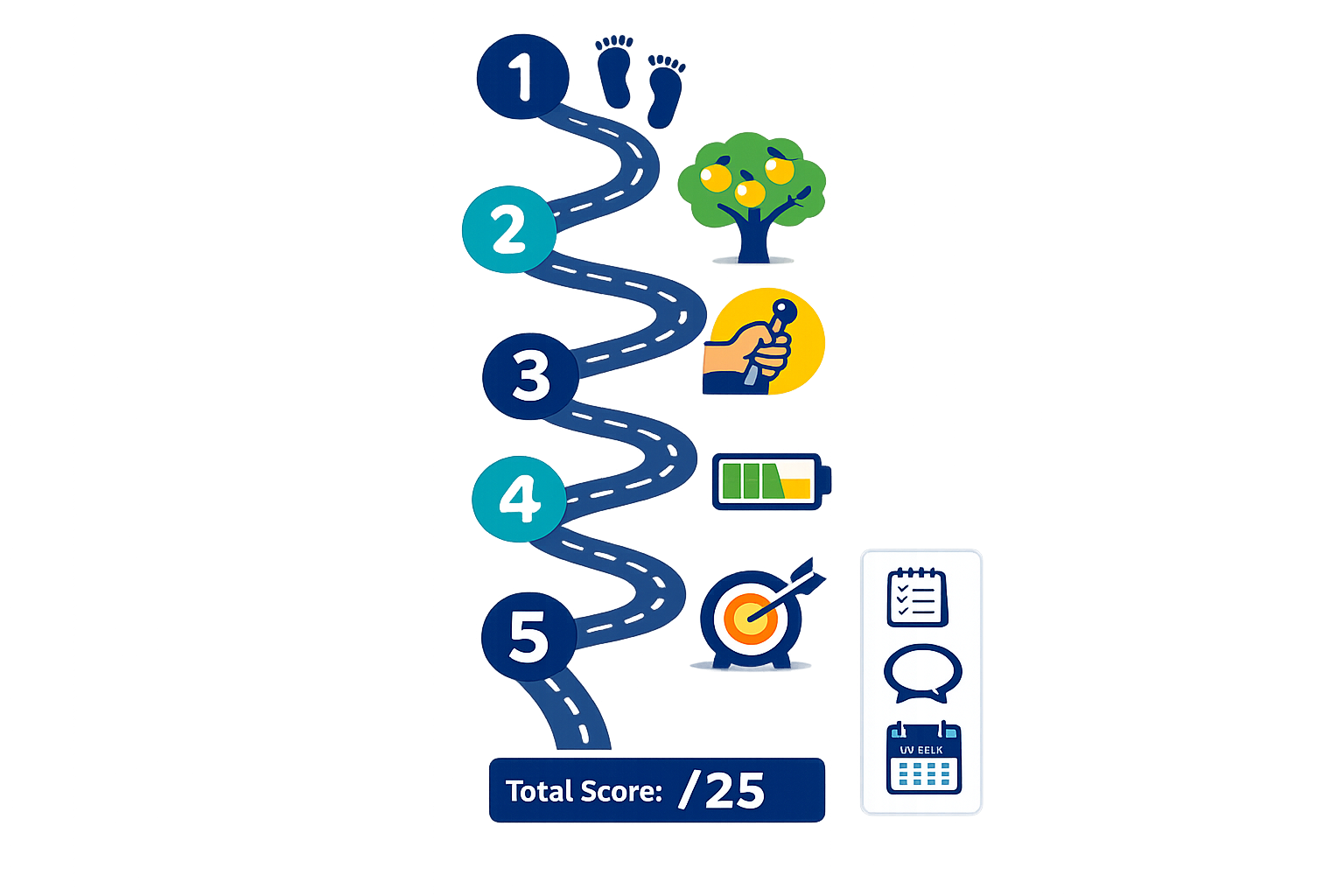
Is Your Career a Path of Freedom or Confinement? A 5-Question Check
Rate
each from 1–5:
1 = Not true at all | 3 = Sometimes | 5 = Very true
1) Movement & Exploration
I can explore (projects, skills, directions) without needing to “escape” to
grow.
1 2 3 4 5
2) Fruits Along the Path
In the last 90 days, my work has produced fruit—learning, pride, momentum,
meaningful wins.
1 2 3 4 5
3) Levers in My Hands
If I needed more income/flexibility/challenge/impact/growth, I can pull clear
levers to pursue it.
1 2 3 4 5
4) Energy & Invigoration
Most weeks, this work leaves me more energized than drained, and I don’t dread
returning.
1 2 3 4 5
5) Direction & Fit
This path is taking me where I need to go next, and I can see at least one
promising next step.
1 2 3 4 5
Total (out of 25): _______
- 20–25: Mostly Freedom — strengthen it by pulling your levers more
intentionally.
- 14–19: Mixed Terrain — find the weakest area and run a small experiment.
- 5–13: Mostly Confinement — it’s time to start forging. This is where changing
your path becomes the work.
Why changing your path feels so hard (even when it’s right)
The challenge isn’t the destination. It’s starting from where you are.
People underestimate the journey. They think “new path” should feel clean and
obvious. But forging a path is messy. Slow. Full of awkward drafts and
imperfect steps. That doesn’t mean you’re doing it wrong—it means you’re
actually doing it.
Nothing is lost. Every step you take while changing your path challenges the
deeper patterns that kept you stuck in the first place.
And honestly—what could be more important than that?
YOUR NEXT PRACTICAL STEPS FORWARD
1.
Do a 20-minute “confinement audit”: top 3 drains, top 3 desires.
2. Write a one-sentence “free path” aim: “I want work where I can ____ while
using ____ to create ____.”
3. Run one micro-test this week: post, build a sample, do a tiny project, offer
a small service.
4. Book two conversations: one with someone doing the work, one with someone
who hires/buys it.
5. Block a weekly 60–90 minute “path-building” session—no spiraling, just
action.
That’s how you stop fantasizing and start changing your path—one grounded step
at a time.
Related Posts:
- What the Biggest Change in Life Really Looks Like (Through Your Career)
- How to Be Independent as a Young Adult (Without Cynicism): Build the Character That Creates Options
- Follow Your Intuition in a Career Change: The Inner Curriculum That Reveals Your Next Step
- Fear of Career Change: Why ‘Choosing Wrong’ Isn’t the Problem (Stagnation Is)
Recent Articles


-
Biggest Change in Life
Dec 31, 25 06:53 PM
 How your career can offer the biggest change in life and why mindset is the hidden barrier
 -
Process of Becoming an Adult
Oct 05, 25 12:18 PM
A practical 5-pillar framework for the process of becoming an adult: build independence, income, resilience, emotional strength, and a reputation you can use. -
Did the results of the last election hurt your industry and career?
May 02, 25 03:20 PM
Career and elections. Some helpful perspective when results seemed to have hurt your career opportunities.