Process of Becoming an Adult
(When you don’t want your career to be just a box you fit in)
A warm, practical
5-pillar framework to build real independence—income, emotional strength,
resilience, and a reputation you can leverage—starting with the next step at
your feet.
Let’s
make “career” less cringe for a second.
When you hear the word career, it can sound like a dusty file folder labeled
“Conform, Please.” Like it’s for people who love organizational charts and say
things like “circle back” without irony. But here’s the reality: a career is
just the process of becoming an adult—meaning you learn how to reliably earn
money, feed yourself, pay your bills, and build a life that doesn’t collapse
the moment someone else stops helping.
That’s not selling out. That’s buying freedom.
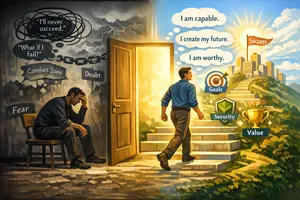
And if you’re ambitious but feel disillusioned (or quietly furious) because
you were told, “Do everything right and you’ll be fine,” welcome to the club.
The world is messy. The economy can be rude. Some people get head starts. But
adulthood starts when you decide, “Okay. Given reality… what am I going to do
next?” That decision is the process of becoming an adult, in real time.
Here’s a simple framework I want you to borrow—because when life feels big and
vague, you need something you can actually execute.
The 5-Pillar Adulthood-As-Career Model
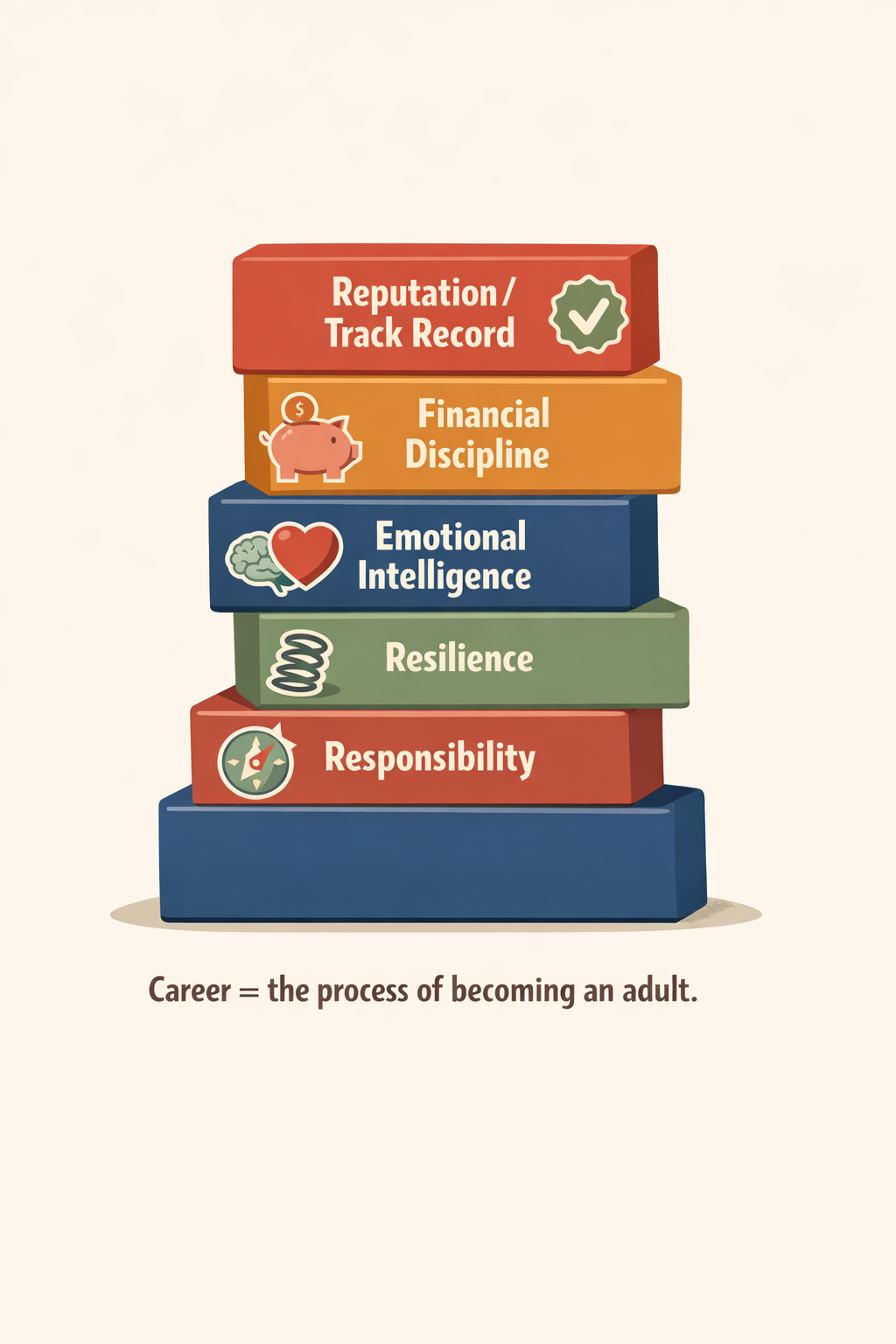
1) Responsibility (Ownership Over Blame)
Responsibility doesn’t mean “everything is your fault.” It means “your life is
your job.”
Yes, the system has flaws. Yes, you may have been handed a weird deck. But
blaming the dealer doesn’t improve your hand. Responsibility is choosing the
one move you can make today—without waiting for your parents, a politician, or
the universe to finally understand you.
A lot of people get stuck in what I’ll call the “stifled adult” zone:
technically grown, emotionally exhausted, and spiritually allergic to
accountability. It looks like resentment, cynicism, and a thousand reasons
nothing can work.
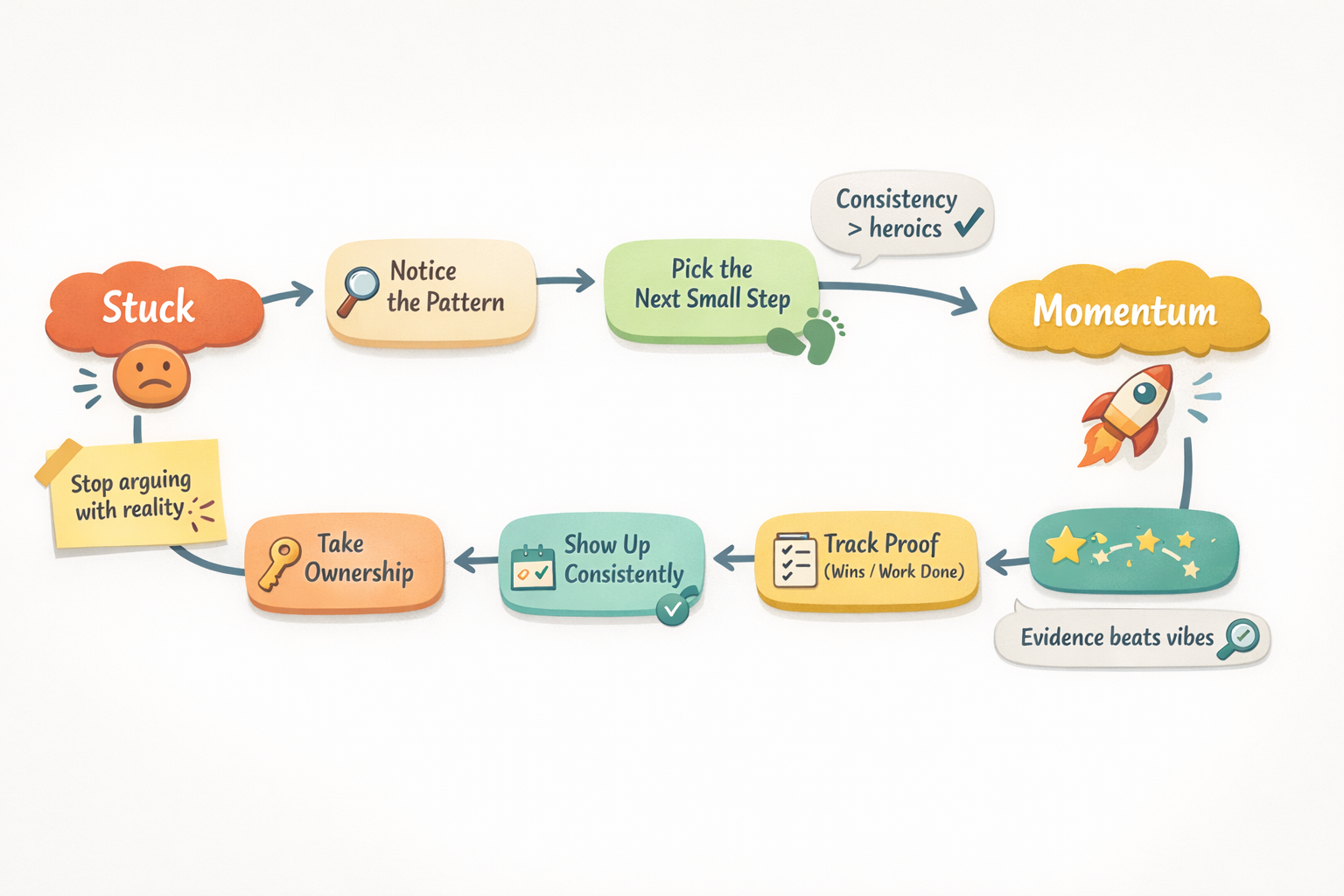
The exit ramp is ownership. Not perfection—ownership. This is the process of
becoming an adult: you stop arguing with reality and start building within it.
TRY THIS (1. Accept Responsibility for Your Life)
- Journaling (10 minutes): “Where am I blaming people/systems for my situation, and what’s one step that’s fully under my control this week?”
- Identify one “grown-up” commitment: choose one responsibility you’ve been avoiding (doctor appointment, overdue bill, job application) and schedule it today.
- Create a consequences list: write 3 costs of staying stuck (money, relationships, self-respect) and 3 benefits of taking ownership.
- Anti-sabotage check: “When things start going well, what do I do that derails it?” (e.g., quit early, pick fights, stop showing up). Pick one replacement habit.
2) Financial Discipline (Freedom Requires Leverage)
Independence is expensive. Not in a glamorous way—more like “rent and groceries
keep showing up every month” expensive.
Financial discipline is how you buy time, options, and breathing room. It’s not
about becoming a spreadsheet wizard. It’s about leverage: spend less than you
earn, build a buffer, and stop making choices that trap Future You.
This is also where “paying your dues” becomes useful instead of insulting.
Early jobs, imperfect roles, starter steps—these aren’t proof you failed.
They’re stepping stones that fund the next move. The process of becoming an
adult includes learning to treat money like a tool, not a mood.
TRY THIS (2. Build Financial Independence)
- One money move this week: cancel or downgrade one subscription/expense you don’t truly value (streaming, apps, deliveries) and transfer that amount to debt savings the same day.
- Do a 20-minute “downsizing sweep”: list your top 5 discretionary spends from the last 7 days; choose one to cut by 50% for the next two weeks.
- Pay yourself first (micro-version): set up an automatic transfer of even $10–$25/week to a separate “freedom fund.”
- Debt momentum: pick one debt and make one extra payment this month (even small) to train the habit of progress.
- Track it fast: use one note on your phone called “Money Rules” with 3 rules (e.g., “No food delivery weekdays,” “48-hour rule for non-essentials,” “Spend < earn weekly”).
3) Emotional Intelligence (Self-Mastery + Social Trust)
Your career isn’t just what you do. It’s who you become while you do it.
Emotional intelligence is how you handle conflict, feedback, rejection,
pressure, and the occasional moment where someone says something wildly
unhelpful with full confidence. It’s how you build trust instead of burning
bridges. It’s how you become someone people want to work with, recommend, and
keep around.
Also: it’s how you stop having the same fight with the same person in a
slightly different outfit every week.
This pillar matters because independence isn’t just financial—it’s relational.
If your life is full of drama, unstable friendships, and constant fallout, it’s
hard to build momentum. The process of becoming an adult is learning to respond
instead of react.
TRY THIS (3. Build Emotional Intelligence)
- “Be the bigger person” script: in your next recurring conflict, say: “I hear you. I’m going to take responsibility for my part. Here’s what I can do differently.”
- Pattern spotter journaling: “What situation reliably triggers me at work/home, and what story do I tell myself in that moment?”
- Bridge-building action: send one message that restores trust—thank someone for something specific, or apologize for one concrete behavior (no defensiveness).
- Adaptability rep: when you hit a roadblock, write 3 alternative routes before you complain to anyone (train obstacle → options).
- Boundaries practice: choose one small boundary you’ll enforce calmly (e.g., “I can talk about this at 6pm, not during work”).
4) Resilience (Setbacks Are Tuition, Not Identity)
Setbacks feel personal when you’re young because everything is new, and your
ego is trying to keep you safe by declaring, “This means I’m doomed forever.”
It doesn’t.
Early failures aren’t proof you’re broken. They’re tuition. They’re the price
of entry for competence. The people who “make it” aren’t the ones who never
fall—they’re the ones who don’t turn one fall into a permanent identity.
Resilience is consistency without the drama. Not heroic. Not cinematic. Just:
take the next step. Again. That’s the process of becoming an adult: you don’t
wait to feel confident—you earn confidence by continuing.
TRY THIS (4. Recover from Early Career Setbacks)
- “Step at your feet” plan: list 5 realistic next steps (apply to 3 roles, update resume, enroll in one course, ask for one referral, show up to one networking event). Choose 1 and do it within 24 hours.
- Failure reframe prompt: “What did this setback teach me that increases my odds next time?” Write 3 lessons and 1 changed behavior.
- Consistency > heroics: set a 30-day minimum daily action (15 minutes): applications, portfolio work, outreach, practice—no zero days.
- Reputation builder: identify one way to be undeniably reliable this week (arrive early, deliver ahead of deadline, follow up in writing).
Momentum audit: “Where do I quit too soon?” Pick a point (week 2, first rejection, first criticism) and decide your new rule (e.g., “I continue for 90 days before judging results”).
5) Reputation & Track Record (Evidence Beats Vibes)
Here’s an uncomfortable truth that’s also incredibly freeing: nobody owes
you a great life because you’re smart, talented, or “meant for more.”
The world rewards evidence. A track record. Reliability. Follow-through. Proof
that you can be trusted with responsibility.
This is why showing up matters. Finishing matters. Communicating matters. Doing
the unglamorous work matters. Your reputation becomes your shortcut—because it
starts opening doors before you even knock.
TRY THIS (Build Reputation with Receipts)
- Journaling prompt: “If someone evaluated my reliability based on the last 30 days, what evidence would they point to?” List 3 wins
- Choose a single deliverable you’ve been dragging (send the proposal, publish the draft, close the loop with a client, complete the certification module).
- Make one communication upgrade that reduces chaos
Send one proactive message today: a status update, a clarified timeline, or a
“here’s what I need from you” note. Reputation often grows faster through clean
communication than through heroic effort.
- Do one “money move” to buy breathing room
- Be the bigger person—concretely, not dramatically
In one recurring conflict, do a reset script: “I want this to go better. Here’s what I’m responsible for. Here’s what I need going forward.”
PUTTING IT ALL TOGETHER: INDEPENDENCE IS PRACTICED
Everyone
ages. Not everyone grows up.
Independence isn’t a birthday. It’s a skill stack. And your career—whatever
shape it takes—is one of the main arenas where you build that stack. This is
the process of becoming an adult: practiced responsibility, practiced
discipline, practiced emotional skill, practiced resilience, and practiced
reliability.
If you feel behind, you don’t need a reinvention. You need traction.
GROUNDED
ACTION: THE “STEP AT YOUR FEET” PLAN (DO THIS THIS WEEK)
1)
Pick one income move:
- Apply to 3 roles, or
- Ask for 2 referrals, or
- Pitch 5 freelance leads, or
- Add one skill to your resume (a small course + a small project).
2) Pick one money move:
- Cancel/downgrade one expense you don’t value and redirect that money to a buffer (even $20).
3) Pick one maturity move:
- Handle one avoided responsibility (appointment, paperwork, overdue email, difficult convo).
4) Pick one reputation move:
- Be painfully reliable in one small way (early, prepared, follow-up in writing, deliver ahead of time).
That’s not glamorous. But it’s how momentum is built. And momentum is how you
get free.
PROCESS OF BECOMING AN ADULT = CAREER IN ACTION
=
the process of becoming an adult (repeated daily)
1) Responsibility: “I own my next move.”
2) Financial Discipline: “I buy options.”
3) Emotional Intelligence: “I build trust.”
4) Resilience: “I learn and continue.”
5) Reputation: “I deliver evidence.”
If you tell me your current situation (income level, living setup, biggest
skill, biggest frustration), I can help you choose the “step at your feet” that
creates the fastest traction without burning you out.
Related Posts:
- Meaningful Career: How to Define It (and How to Measure If You’re Living It)
- Meaningful Career For Young Adults: Build Direction Without Losing Yourself
- Career Coach for Young Adults: Turn Confusion Into Clarity (and a Real Plan)
- Phases of Life: The Career Doors You Don’t See Opening (Until You Stop Headbutting the Same One)
- A Life Lesson in Conflict: Break the Pattern, Build Your Power
- Career Myths: The Sneaky Beliefs Keeping You Stuck (and How to Rewrite Your Next Chapter)
- The Search For Meaningful Work: Stop Chasing Purpose—Start Building It (Reps, Not Revelations) (hub)
Recent Articles


-
Biggest Change in Life
Dec 31, 25 06:53 PM
 How your career can offer the biggest change in life and why mindset is the hidden barrier
 -
Process of Becoming an Adult
Oct 05, 25 12:18 PM
A practical 5-pillar framework for the process of becoming an adult: build independence, income, resilience, emotional strength, and a reputation you can use. -
Did the results of the last election hurt your industry and career?
May 02, 25 03:20 PM
Career and elections. Some helpful perspective when results seemed to have hurt your career opportunities.