A Life Lesson in Conflict: Break the Pattern, Build Your Power
How to break repeating patterns in disagreements and unlock new professional possibilities
Most career frustration isn’t because you’re missing some magical skill, certification, or secret handshake. It’s because high-pressure moments expose the parts of you that still need refinement—and inside that friction is often a life lesson you can’t outsource.
It’s because you keep running the same internal software in conflict—and that software is… buggy. Not because you’re broken. Because you’re human. And because tension tends to poke the exact places where growth lives.
That’s why a career change often isn’t just a new role. It’s an identity-level shift. Same you, upgraded operating system. And usually, right in the middle of that upgrade is a life lesson you’ve been politely ignoring (or aggressively side-stepping with busy-ness, perfectionism, or “I’m fine”).
Here’s the pattern I see all the time with ambitious, slightly crispy professionals:
You’re making progress. Things are moving.
Then—bam—a roadblock shows up.
Maybe it’s a disagreement, a tense negotiation, unclear expectations, feedback that lands like a slap, or that one person who can raise your blood pressure with a single Slack message.
And then:
You react.
You lose momentum.
You spend energy cleaning up the mess.
You rebuild.
And eventually… it happens again.
When that loop keeps repeating, it’s not a sign you’re doomed. It’s a sign you’re standing in front of a life lesson with your arms crossed, saying, “No thanks, I’d like to skip this chapter.” (Respectfully: the chapter will keep finding you anyway.)
The Hidden Pattern Keeping Your Career Stuck
The hidden pattern isn’t “I’m not talented enough.”
It’s “When tension hits, I default to an old strategy.”
Old strategies look like:
- Needing to be right
- Avoiding the conversation until it becomes a crisis
- Over-explaining, over-defending, over-functioning
- Getting sharp, sarcastic, or cold
- People-pleasing and then quietly resenting everyone
None of these make you a bad person. They just make you predictable in moments that require range.
And until you notice the pattern, your career options stay smaller than they need to be—because every promotion, partnership, client relationship, and big opportunity eventually comes with… people. And people come with feelings.
The Real Cost of Mishandled Disagreements
Mishandled disagreements don’t just create an awkward moment. They create a compounding career penalty—like interest, but in the worst way.
1) Lost momentum
One conflict can derail weeks of progress. Suddenly you’re repairing instead of building.
2) Reputation drag (even if you were “right”)
People forget the details. They remember the emotional weather around you. If you feel risky to work with, you’ll get fewer invitations to the good rooms.
3) Burned bridges
Trust doesn’t always explode—it often just quietly leaves the building. Referrals stop. Advocacy disappears. Opportunities dry up.
4) Fewer options
This is the sneaky one. Doors don’t slam. They simply don’t open next time.
5) Less income
Most money upgrades involve tension: pricing, scope, timelines, responsibility. If you can’t stay grounded there, you under-earn or lose deals.
6) The hope leak
Repeating blowups create a story: “It’s always like this.” And that story makes you play smaller.
7) Burnout + isolation
Constant conflict is exhausting. And if you keep torching relationships, you end up on an island—successful on paper, stuck in real life.
If you’ve been thinking “Maybe I need a new career,” sometimes what you actually need is a life lesson that upgrades how you relate to stress, power, and other humans.
A Life Lesson in Conflict: Emotional Intelligence
Let’s name it plainly: emotional intelligence in conflict is the life lesson many high-achievers must learn.
Not “be nice.”
Not “let people walk all over you.”
Not “stuff your feelings into a drawer and become a productivity robot.”
Emotional intelligence means you can stay present when it’s uncomfortable:
- You regulate before you respond
- You seek to understand before you persuade
- You take ownership without self-flagellation
- You stay firm without going nuclear
This is an identity shift: from “I must win / be right / protect my ego” to “I can handle hard moments and still lead.”
That is a life lesson with compound returns.
WHAT THIS LIFE LESSON MEANS FOR YOUR CAREER
1) You earn trust faster (and keep it)
When you handle tension without blaming, escalating, or disappearing, you become the steady one. People rely on steady. They promote steady. They refer steady.
2) You gain leverage in negotiations (often meaning more income)
Calm people negotiate better. They ask smarter questions. They don’t get baited into emotional discounts or scope creep. That’s a career skill and a life lesson rolled into one.
3) You create career freedom through expanded options
When you stop burning bridges, your network stays warm. Doors stay open. You get more “yes” opportunities—and you can choose what fits instead of grabbing what’s left.
HOW TO PRACTICE THIS LIFE LESSON THIS WEEK
1) Spot your trigger pattern (5 minutes)
Pick one: defensiveness, blame, avoidance, people-pleasing, shutting down.
Write: “When I feel ___, I tend to ___.”
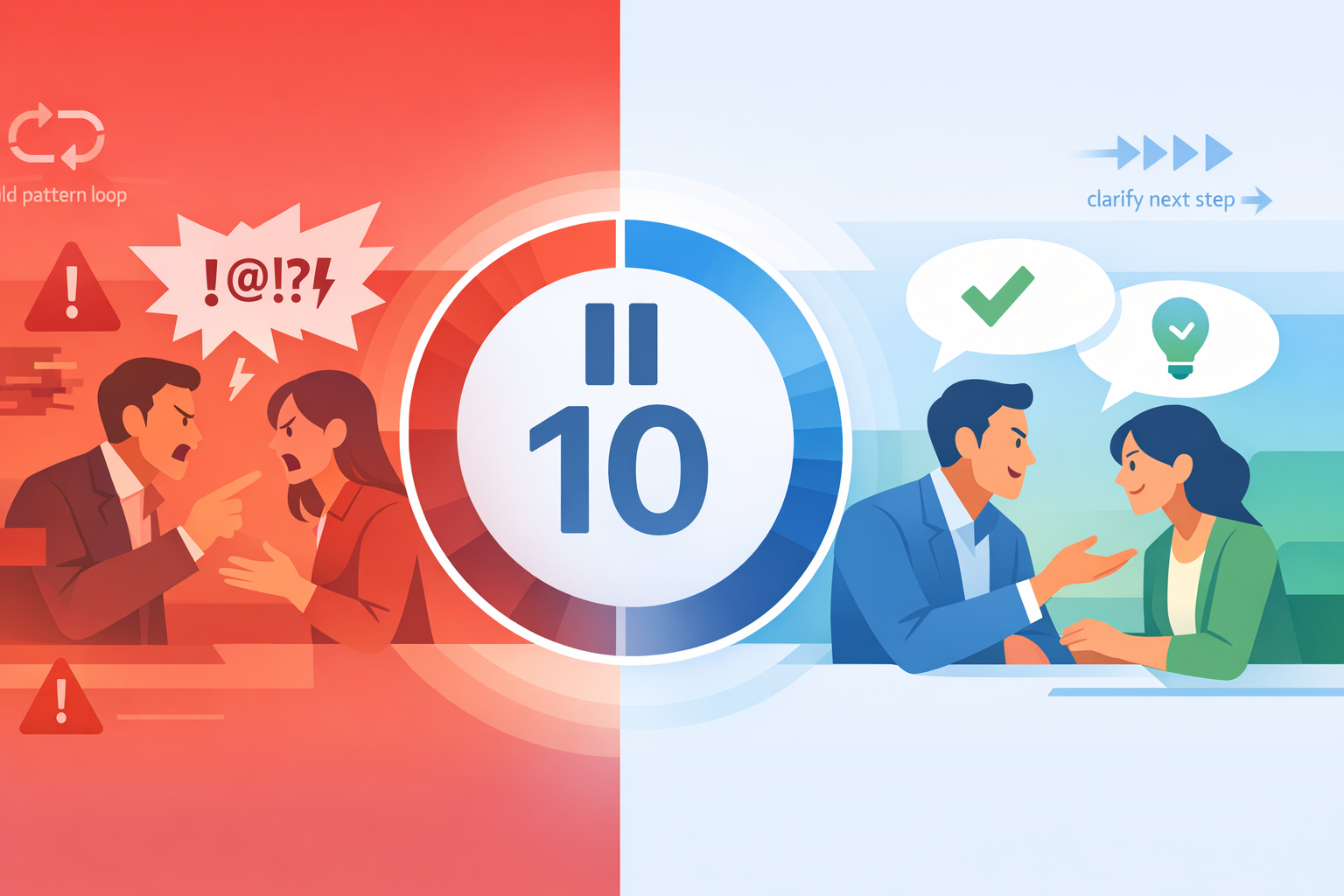
2) Use a 10-second pause all week
Before you reply (especially in writing), breathe and count to ten.
If needed: “I want to respond thoughtfully—give me a moment.”
3) Ask one understanding-first question in any tense moment
“What matters most to you here?”
“What does a good outcome look like?”
“What am I missing?”
4) Take ownership once
“You’re right—I could’ve communicated sooner.”
“I see how that landed. That’s on me.”
5) Repair one relationship thread
“I value working with you. Can we reset and align on next steps?”
6) Do a 3-sentence debrief after any disagreement
What triggered me?
How did I respond?
What will I do differently next time?
This is how you turn a life lesson into a practical habit—without needing a personality transplant.
Reflective Questions
1) What repeating disagreement pattern do I see in my career—and what reliably triggers it?
2) When conflict hits, what am I protecting most: ego, image, control, or respect?
3) What opportunity might I be quietly losing each time I handle tension the old way?
Your Next Tough Conversation: The Specific Challenge
Use “Pause + Validate + Clarify + Next Step.”
1) Pause (10 seconds)
“I want to respond thoughtfully—give me a moment.”
2) Validate (one sentence, genuine)
“I can see why that would be frustrating.”
or “That makes sense from your side.”
3) Clarify (one forward-moving question)
“What would a good outcome look like for you?”
or “What’s the first thing we need to solve?”
4) Next step (one concrete agreement)
“Here’s what I can do by Friday. Can you confirm you’ll do X by then too?”
Rule: No blaming language for the first 2 minutes. Your only job is to understand, validate, and clarify before you propose solutions.
Here’s the real punchline: the career change you want may require a new environment… but the career freedom you want requires a life lesson. Learn it sooner, and your options expand—more trust, more income, better relationships, and a future that doesn’t feel like you’re dragging a boulder uphill in dress shoes.
Related Posts:
- Meaningful Career: How to Define It (and How to Measure If You’re Living It)
- Process of Becoming an Adult (When you don’t want your career to be just a box you fit in)
- Career Coach for Young Adults: Turn Confusion Into Clarity (and a Real Plan)
- Phases of Life: The Career Doors You Don’t See Opening (Until You Stop Headbutting the Same One)
- Meaningful Career For Young Adults: Build Direction Without Losing Yourself
- Career Myths: The Sneaky Beliefs Keeping You Stuck (and How to Rewrite Your Next Chapter)
- The Search For Meaningful Work: Stop Chasing Purpose—Start Building It (Reps, Not Revelations) (hub)
Recent Articles


-
Biggest Change in Life
Dec 31, 25 06:53 PM
 How your career can offer the biggest change in life and why mindset is the hidden barrier
 -
Process of Becoming an Adult
Oct 05, 25 12:18 PM
A practical 5-pillar framework for the process of becoming an adult: build independence, income, resilience, emotional strength, and a reputation you can use. -
Did the results of the last election hurt your industry and career?
May 02, 25 03:20 PM
Career and elections. Some helpful perspective when results seemed to have hurt your career opportunities.