I Regret Quitting My Job: What to Do
Next When the “Fresh Start” Feels Like Free-Fall
A practical,
step-by-step plan to calm the emotional whiplash, get clarity on what you miss,
and choose your next move (return, new job, or new path).

Help.
You quit your job, told yourself, “Fresh start. New chapter. Main character
energy.” And now, a few days (or weeks) later, you’re staring at the ceiling
thinking: i regret quitting my job.
First—exhale. You didn’t ruin your life. You made a big move, and big moves
come with emotional aftershocks. This is especially true for ambitious,
high-performing, slightly fried professionals who are used to being competent
on Day 1.
Here’s the candid truth: quitting isn’t just a logistical change. It’s an identity
change. It’s the moment you stop being “the person with the
job/title/team/email signature” and become “the person figuring it out.” That
gap can feel terrifying… even when it’s necessary.
Let’s make this practical.
I Regret Quitting My Job - What Do I Do? (Step-by-Step)
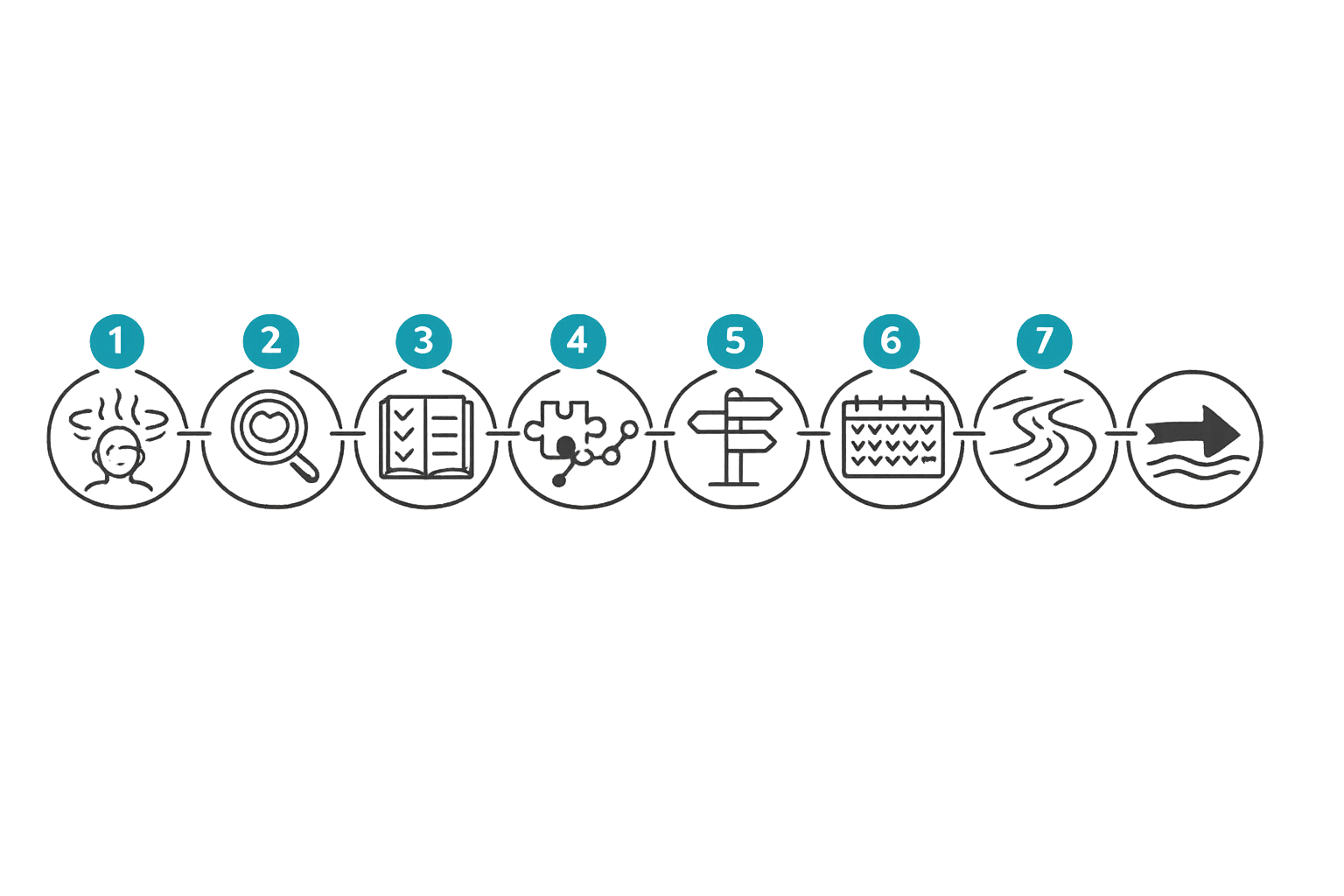
1)
Normalize the emotional whiplash
Regret, doubt, and grief don’t mean you made a “terrible decision.” They mean
your nervous system liked predictability. Your brain is basically a spreadsheet
with feelings.
2) Identify what you actually miss
Most people don’t miss the work—they miss the stability. Ask: Am I grieving
income, routine, identity, relationships, or certainty? (Hint: it’s often
“certainty” wearing a fake mustache.)
3) Revisit why you left—no revisionist history allowed
Write the real reasons down, unedited. What drained you? What felt misaligned?
What need wasn’t being met? This prevents your mind from turning your old job
into a romantic comedy when it was actually a slow-burn stress thriller.
4) Reframe regret as “incomplete data,” not “I failed”
When you think i regret quitting my job, you’re usually reacting to the messy
middle—the part where the next step isn’t obvious yet. That doesn’t mean the
quit was wrong. It means the plan isn’t finished.
5) List options without ranking them by ego
Make three columns:
- Return (same company, different terms—or same terms)
- New job (lateral is fine; stability is a strategy)
- New path (retraining, freelancing, bridge job, apprenticeship)
You’re not choosing “the best title.” You’re choosing a workable path that
leads somewhere.
6) Create a 30-day plan you can actually execute
Keep it grounded: update resume/LinkedIn, reach out to 5 people, apply
consistently, explore one training route, set a daily routine, protect cash
flow. The goal is momentum, not perfection.
7) Keep moving forward (even with uncertainty in the passenger seat)
The past is loud because it’s familiar. But your career is a river—it moves
downstream. If you keep trying to swim backward, you’ll exhaust yourself and
still end up wet.
A HARSH REALITY ABOUT BIG DECISIONS (and Shy You’re Not “Behind”)
When
you make a life-altering move, you unconsciously demand immediate proof that it
was “the right one.” If the results aren’t instant, your inner critic grabs a
megaphone: i regret quitting my job.
That’s the trap: treating the early discomfort of transition like evidence of
failure. It’s not evidence. It’s a phase.
Relax—it’s part of the journey
Regret is often just grief in business casual. Leaving a role can trigger the
same stages you’d see with any major loss or change:
Denial -> Anger -> Bargaining -> Depression -> Acceptance
If you’re bouncing around in there, congrats—you’re human. The goal isn’t to
“never feel regret.” The goal is to keep building your next chapter while you
feel it.
My experience (because you’re not the only one)
I’ve been there. When I shut down my window cleaning business after more than a
decade, I went through a stretch where I genuinely wondered if I’d done
something stupid. It felt like I’d given up the one thing that proved I was
capable. My mood dipped. My confidence wobbled.
What helped wasn’t a magic insight—it was a perspective shift: regret didn’t
mean I failed. It meant I cared. It meant I was in transition. Once I stopped
treating the feeling as a verdict, I could use it as information and keep
moving.
Quitting is the first step—not the full transformation
Here’s
the identity-level truth: the quit created a void on purpose. That space is
where you build the next version of you—more aligned, more intentional, more
you.
But space can feel like free-fall if you don’t give it structure. So you don’t
just “exit the old path.” You design the new one, one practical step at a time.
Also: don’t expect instant clarity. Closing a door doesn’t automatically open
another—it just stops the draft. You still have to walk down the hallway and
try a few handles.
What you need isn’t “better.” What you need is a path.
A huge chunk of regret comes from the fear that you don’t have options. And
then the mind starts measuring every option by pay, perks, and status.
Status is a sneaky trap. It will talk you out of good, workable moves because
they feel like a “step down.” But sometimes a “step down” is actually a step
toward sanity, skills, or a cleaner runway to the next leap.
A career path often only makes sense in hindsight. It’s less about the title
and more about what the role unlocks.
So if you’re stuck repeating i regret quitting my job, consider this: you may
not need the “best” next move. You may need the next move that creates
traction.
Should You Try To Get Your Old Job Back?
Decision
Checklist (Yes/No)
1) Would returning solve the real issue (income/structure), not just soothe
anxiety for a week?
2) Were your reasons for leaving fixable (workload, manager, role clarity,
boundaries, schedule)?
3) Can you reach out without shame spiraling—and frame it professionally?
4) Did you leave on good terms with a strong reputation?
5) Is there a version of that role you could tolerate (or even enjoy) for 6–12
months?
6) If they say “no,” can you handle it and still move forward?
If Returning Might Be Right For You
Communication tips (calm, confident, no groveling):
- Lead with value, not emotion: “I’ve reflected, and I believe I can contribute
strongly in X. Is there a need on your team right now?”
- Be specific about fit: role, timing, and what would need to be different
(scope, boundaries, schedule).
- Keep it easy and low-pressure: ask for a short call, acknowledge timing may
not work, and express appreciation.
IF MOVING ON IS BETTER
Concrete next moves (so regret doesn’t become a lifestyle):
- Choose a bridge plan for income: a stable interim role is not failure—it’s
strategy.
- Run a 2-week “focused search sprint”: tighten your positioning, reach out to
10 people, apply to a short targeted list consistently.
- Build proof-of-work in parallel: pick one skill or direction and produce
something tangible in 30 days (portfolio piece, case study, certification,
small freelance project).
You’re not “going backwards.” You’re recalibrating.
Regret is loud when your identity is between versions. But you didn’t quit
because the job was amazing—you quit because something in you knew it wasn’t
sustainable.
Now your job is simple (not easy, but simple): build the next path with
structure, humility, and momentum. Better times are in front of you—not behind
you.
If you keep hearing “I regret quitting my job” on a loop,
don’t treat it like a verdict—treat it like a signal that you need a plan.
Book a Calgary Career Reset Session with a local career strategist and we’ll
turn the emotional whiplash into a clear 30-day path. Together, we’ll:
- stabilize your routine and confidence (so you can think clearly again)
- choose your best next lane: return, new job, or new path—without ego running
the show
- build a simple weekly action plan for applications, networking, and income
runway
You’ll walk away knowing exactly what to do next—and how to do it without
spiraling.
Ready to get traction this week? Book your Calgary Career Reset Session now.
- Should I Quit My Job? How To Decide When It’s Time to Leave or Switch Careers (hub)
- Signs You Should Quit Your Job: Reasons, Red Flags, and the Emotions You Can’t Ignore
- Feeling Guilty About Quitting Job? How to Leave with Integrity (Without Second-Guessing Yourself)
- Burnout at Work: When “Just Keep Going” Stops Working
- The "I Keep Quitting Jobs" Phase (And Why It's Not the End of Your Story)
- Reasons for Quitting a Job: The 7-Question Checklist to Know When It’s Time
Recent Articles


-
Biggest Change in Life
Dec 31, 25 06:53 PM
 How your career can offer the biggest change in life and why mindset is the hidden barrier
 -
Process of Becoming an Adult
Oct 05, 25 12:18 PM
A practical 5-pillar framework for the process of becoming an adult: build independence, income, resilience, emotional strength, and a reputation you can use. -
Did the results of the last election hurt your industry and career?
May 02, 25 03:20 PM
Career and elections. Some helpful perspective when results seemed to have hurt your career opportunities.